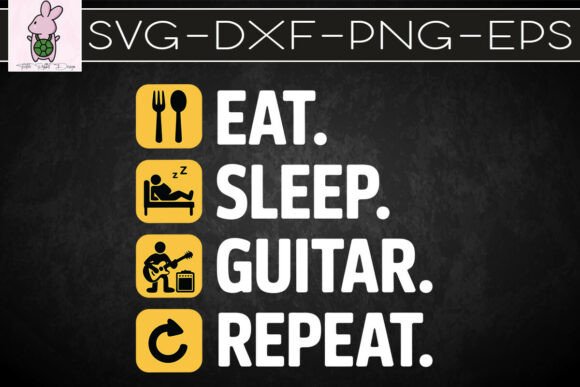
Eat Sleep Guitar Repeat Lover SVG Graphics for Crafts
When I first opened the Eat Sleep Guitar Repeat Lover SVG file, I immediately recognized the kind of niche energy that sells well on creative marketplaces. This is a design that speaks directly to guitar enthusiasts, music lovers, and anyone who wraps their identity around a six-string. The phrasing carries a playful, almost mantra-like quality that works beautifully for merchandise aimed at musicians, band fans, and hobbyist players. As someone who has launched hundreds of digital products on Etsy, Creative Fabrica, and print-on-demand platforms, I can tell you that this design has a clear audience baked right into the concept.
The visual personality leans bold and casual with a handmade feel. It is not overly polished or corporate, and that is exactly why it works for crafts and graphics aimed at small business branding and personal expression. The design feels like something a guitarist would actually wear on a tee or slap on a water bottle. That authentic connection between the design and the buyer is what drives conversions in a crowded marketplace.
First Impressions and Audience Fit for a Music-Themed Design
What stands out immediately about the Eat Sleep Guitar Repeat Lover SVG is its simplicity. The phrase itself is memorable, repetitive in a catchy way, and instantly relatable to anyone who plays or collects guitars. This is not a design that tries to appeal to everyone. It targets a specific subculture: musicians, guitar teachers, cover bands, roadies, and fans who live and breathe guitar culture. That focus is a strength. When you sell digital downloads or print-on-demand items, a narrow audience often converts better than a generic one because the buyer feels the design was made for them.
The file arrives as a digital design kit, meaning you get multiple formats out of the box. The SVG is cup-sized and design software-friendly for quick use. That matters when you are preparing listings quickly or batch-producing products for a new collection. The PNG files come in high resolution with a clear background, which saves time on mockups and listing images. The DXF format is also included, which is essential for anyone using Cricut, Silhouette, or other cutting machines. This kind of format variety is exactly what I look for when evaluating a graphic design asset for commercial use.
Testing the Design Across Real Product Scenarios
Before I commit a design to a listing, I run it through a series of product tests. I start with a simple t-shirt mockup. The Eat Sleep Guitar Repeat Lover SVG sits well on a left chest print or a large center placement. The text-based design reads clearly at a distance, which is critical for apparel. I then test it on a mug mockup. The cup-sized SVG scales down nicely without losing legibility. That is not always the case with detailed clipart, but this design holds its visual hierarchy even at smaller sizes.
Next, I test it as a sublimation design on a tumbler wrap. The PNG with a transparent background makes placement easy, and the high resolution ensures no pixelation when printed. I also test it as a sticker design. For sticker sales on Etsy, the design needs to cut cleanly around the text. The SVG format handles that well, especially if you are using a Cricut or Silhouette. The clean lines mean you are not fighting with intricate cut paths that increase production time.
I also preview the design as a Canva template element. Because the PNG has a transparent background, I can drop it directly into social media graphics, blog headers, or promotional visuals for a music-related brand. The design adds instant personality to a Facebook cover photo or an Instagram post advertising guitar lessons. That versatility expands the potential customer base beyond just physical products.
Product Presentation and Thumbnail Appeal
One of the underrated aspects of any digital product is how it performs in a marketplace thumbnail. The Eat Sleep Guitar Repeat Lover SVG has a bold, readable layout that works at small sizes. When I shrink the design down to a 200-pixel square for a search result, the phrase is still legible. That is a huge advantage on Etsy or Creative Fabrica, where thumbnails compete for attention in a grid of similar products.
For listing images, I usually create a flat lay mockup that includes a guitar pick, a set of strings, or a vintage amp alongside the design. The design itself anchors the visual storytelling. Buyers immediately understand the niche. I also create a bundle version that includes the SVG, PNG, and DXF files in a clearly organized folder. That adds perceived value and reduces the chance of customer confusion after purchase.
When you are selling printable design assets, the buyer needs to trust that the file will work in their software. I always include a screenshot of the SVG opened in Cricut Design Space and a PNG preview with the transparent background visible. That transparency reassures buyers who plan to layer the design on different colored products. The clear background on the PNG files in this kit is genuinely clean. I did not notice any artifacts or rough edges around the text, which is a common problem with less carefully prepared files.
Where the Design Shines and Where to Use Caution
This graphic design asset works best on medium-to-large product surfaces. T-shirts, hoodies, tote bags, canvas prints, wall art, posters, and mugs are all strong candidates. The design also works well on packaging design for small business branding, especially if the business is music-related. Imagine a guitar repair shop using this on a sticker or a thank-you card. That kind of authentic use builds brand identity.
The design can also serve as a social media graphic for a musician's page or a guitar teacher's profile. It is short, punchy, and visually clean. For blog graphics or promotional visuals, the PNG format is ready to drop into any template. If you sell digital downloads for planners or journals, this design could be used as a cover accent or a decorative element on a music-themed planner page.
However, there are areas where you should use caution. The design relies on text, so on very small products like a keychain or a tiny sticker, the words may become difficult to read. I tested it at a 1-inch scale, and while it was still decipherable, it lost some of its visual impact. For Cricut projects where you are cutting vinyl for a small surface, check the cut path carefully in your software. The DXF format should give you clean lines, but I always recommend doing a test cut on scrap material before committing to a final product.
Another consideration is contrast. On a dark background, the design needs a white or light-colored version to maintain readability. The kit includes a PNG with a clear background, which is great, but you may want to create a reversed version yourself for dark substrates. That is a standard workflow for any commercial design asset, and it is worth testing before you list your products.
Practical Seller Notes for Listing and Production
If you are planning to sell finished products featuring this design, here are a few things I always check. First, test the design on a real mockup. Do not rely on the preview image alone. Place it on a black t-shirt, a white mug, and a kraft paper tote bag. See how the colors and contrast hold up. Second, print a physical sample if possible. Colors on screen can look different after sublimation or screen printing, especially if you are using a home printer for heat transfer.
Third, verify the commercial license if you purchased this design from a marketplace. Most creative marketplace listings for SVG designs allow you to use the files on finished products for sale, but restrictions may apply to the number of copies or the type of products. Read the terms carefully, especially if you plan to use the design on print-on-demand items where the volume could be high. When in doubt, reach out to the seller for clarification.
Fourth, organize your files clearly before sending them to customers. If you are reselling the digital design itself, make sure your zip folder includes a clear folder structure with the SVG, PNG, and DXF files labeled intuitively. Add a simple instruction sheet or a link to a video tutorial for buyers who may be new to using SVG designs in Cricut Design Space or Silhouette Studio. That kind of customer support reduces refund requests and builds trust.
Fifth, consider pairing the design with complementary font styles in your own projects. If you are creating a design bundle, a bold sans serif or a handwritten script can work alongside this design without competing for attention. The design itself uses a straightforward display font, so additional text elements should be kept clean and simple to maintain visual hierarchy.
Finally, test the PNG resolution at the size you intend to print. The high-resolution files in this kit are suitable for most home printing and small commercial runs. For large format prints like posters or banner displays, you may need to scale the design in vector software and check for quality loss. The SVG format gives you flexibility to resize without degradation, which is why it is the preferred format for Cricut projects and professional graphics work.
Final Assessment for Digital Sellers and Creatives
The Eat Sleep Guitar Repeat Lover SVG is a solid addition to any music-themed product line. It appeals to a passionate niche, works across multiple product types, and comes in formats that support both digital and physical production. For Etsy sellers looking to expand into musician merchandise, this design offers a low-barrier entry point. The asset is ready to use almost immediately after download, which is exactly what you want when you are managing multiple listings and tight deadlines.
For print-on-demand sellers, the clean text layout and transparent PNG make it easy to upload to platforms like Printful, Printify, or Amazon Merch. The design fits naturally on t-shirts, hoodies, mugs, and tote bags. It also works well as a sticker design or a simple wall art print. If you are building a small business branding kit for a music teacher or a guitar instructor, this design could become a signature piece in their merchandise collection.
From a digital product creator perspective, I appreciate that the file preparation is already professional. The SVG is cup-sized and software-friendly, the PNG is high resolution with a clean background, and the DXF is ready for cutting machines. That level of polish saves me time and reduces the risk of customer complaints. In a competitive marketplace, every minute saved on file preparation is a minute I can spend on marketing, mockups, or product research.
If you are a content creator, blogger, or social media manager, do not overlook the value of this design for digital use. A single PNG file can become a branded graphic for a podcast episode about guitar techniques, a YouTube thumbnail for a gear review, or a visual anchor for an Instagram post about practice routines. The versatility of a good graphic design asset extends far beyond physical merchandise.
Overall, this design earns a practical recommendation for sellers who know their audience and understand the importance of clean, scalable files. It is not trying to be everything to everyone. It is a focused, niche design that does one thing well: speak directly to guitar lovers. In an online marketplace cluttered with generic clipart and overproduced templates, that focused authenticity is exactly what converts browsers into buyers.